
Joe Biden's B3W proposal aims to bring democracies together. India should come up with its own plans to contribute to the initiative, states Rahul Mishra.

'Equities are likely to be range-bound with a downward bias for the remaining part of the year.'

The BJP still does not have a majority in Upper House of Parliament, the Rajya Sabha, and this will pose hurdles to the party's legislative reform agenda

They have also called for giving cash to the poor, so that demand is generated in the economy.

Corporate India's earnings in the past two quarters were largely driven by the rupee's sharp fall versus the dollar in the second quarter of this financial year.

Reserve Bank Governor Raghuram Rajan on Monday warned against compromising India's interest for the sake of attracting foreign investment and said the priority should be framing transparent policies as well as resolving contractual tax disputes quickly.

The third-quarter financials didn't excite market watchers. But equity investors can still make money if they invest in the right stocks.

With the increased death rate in the ongoing second wave of Covid-19, domestic cement companies are in no better condition than they were in the April-June quarter of FY21 when the country faced nationwide lockdown. "This wave has had high death rate which has impacted the business. "We are in no better situation than last (year) April. "Deaths of drivers, dealers, contractors and also employees have hit the industry really very hard since April (FY22)," M Ravinder Reddy, director of Bharathi Cements said.

Automobile dealers' body FADA said the Budget lacked immediate demand boosters for the automobile industry.

'Over the next two quarters, markets will be guided by observing the earnings resilience of corporates during the second lockdown, progress of the monsoon and the damage, if any, to rural spending power due to the second wave.'

Excise duty on most products has been capped at 12.5 per cent

The main purpose of the meeting is to assess their views on reforms that are required to attract long-term capital into the country.

Poor quality of education is one of the most important reasons for high unemployment in India, says Kavita Nigam.

Across the country, the number of patients in ICU beds is 4,88,861 while 1,70,841 patients were on ventilators and 9,02,291 patients were on oxygen support.

Industry seeks cut in customs duty on natural rubber.

Over 600 slots at three major airports - Heathrow, Dubai and New York's JFK International - could be at stake.
"India's economy is projected to sustain a 7.6 per cent growth rate in both fiscal years 2016-17 and 2017-18," says the year-end update of the flagship report Economic and Social Survey for Asia and the Pacific 2016 of the United Nations Economic and Social Commission for Asia and the Pacific (ESCAP).

As India emerges from the COVID-19 crisis, the ninth budget under the Modi government, including an interim one, is widely expected to focus on boosting spending on job creation and rural development, generous allocations for development schemes, putting more money in the hands of the average taxpayer and easing rules to attract foreign investments.
She said the government is preparing a blueprint to build 100 smart cities and to upgrade India's infrastructure

Indian plants -- who plan to begin production with 28 nano metre chips -- will take two to four years to get off the ground. By that time, in the fast changing world of chip making, the global market would have shifted to 22 nm.

In fact, India's investment activity growth is also estimated to touch a 17-year low in FY20. With overall demand not showing signs of revival, investment activity may take longer to recover, economists said.

As the Indian currency hovers around its lowest versus the US greenback, several smaller and mid-sized companies are expected to face rough weather as almost 44 per cent of the foreign loans taken by Indian companies remained unhedged. According to the data sourced from the Reserve Bank of India, Indian companies raised around $38.2 billion in the financial year ended in March. Of this, only 56 per cent of the loans are hedged while the rest of the foreign loans remain unhedged, thus risking the companies to forex volatility.

Blames govt for raising fiscal deficit by financing consumption-based subsidies rather than focusing on infra.

China's slowing means commodity markets are no longer overheated.

Mumbai, Bengaluru, and Kochi airports have hiked their landing charges by up to 45 per cent, increasing the operating cost for airlines at a time they are facing financial constraints because of the two months of grounding and weak demand.

The government has created a comprehensive budget with sharp focus on sustaining economic activity and investment but more clarity is needed on areas like taxation framework for adopting remote working on a long-term basis, IT body Nasscom said on Monday. The industry association noted that the IT/ITeS (Information Technology-enabled Services) industry has been a key driver of growth and jobs in 2020 and there is an opportunity to significantly accelerate it further. "For the IT sector, one of the biggest needs ahead of us is the development of future business models, with hybrid working becoming a reality. "We look forward for the government to provide clarity on providing a framework in direct taxes and indirect taxes for the industry to adopt WFH/remote working on a long-term basis," Nasscom said in a statement.

Raising slogans, members of the BRS, Left parties and some members of the Congress walked out of Lok Sabha in protest as the prime minister was speaking.

The Rs 20 lakh crore package includes Rs 1.7 lakh crore package of free foodgrains to the poor and cash to poor women and elderly, announced in March, as well as the Reserve Bank's liquidity measures and interest rate cuts.
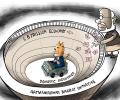
'The first year of the Modi government's second term has laid the roadmap for the future and we will embark on it with gusto,' promises Gopal Krishna Agrawal, the BJP's national spokesperson on economic affairs.

The Union Cabinet on Wednesday approved a Rs 76,000 crore policy boost for semiconductor and display manufacturing ecosystem in the country in an bid to position India as a global hub for hi-tech production. Announcing the decision of the Cabinet, IT and Telecom Minister Ashwini Vaishnaw observed that electronics plays an important role in everyday life, and semiconductor chips forms a crucial part of electronics. Outlining the details of the scheme, he said the Rs 76,000 crore programme has been approved for the development of semiconductors and display manufacturing ecosystem.

Nearly 250 private liquor vends, licensed under now-withdrawn Excise Policy 2021-22, are running currently in the city.

Govt keen to revive business sentiment in india.

The ministry of petroleum and natural gas has granted seven authorisations to companies for selling automobile (auto) fuels in the country. These new approvals are under the relaxed guidelines for authorisation to market transportation fuels that were revised in 2019. This is expected to make the competition more intense in India's petroleum retail business. According to a top oil ministry official, a fresh marketing authorisation has been granted to Reliance Industries (RIL) under these norms. This is being done since RIL's existing retail marketing authorisation has been transferred to its subsidiary Reliance BP Mobility

'At this moment, investors should look for relative value within sectors and clear visibility (third-wave-or-not) on earnings delivery.'
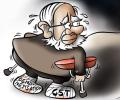
We have to wait and see whether Jaitley's Budget speech translates into actions and desired outcomes, says T N C Rajagopalan.

Infrastructure stocks are once again gaining traction.

It will take a female domestic worker 22,277 years to earn a top CEO of a tech company makes in one year.

The pre-dawn signals are on the balance negative.

The Reserve Bank of India, for the second straight time, on Thursday kept its key policy rate unchanged at 5.15 per cent, maintaining its accommodative policy stance as long as it was necessary to revive growth. The central bank retained GDP growth at 5 per cent for 2019-20 and pegged it at 6 per cent for the next fiscal.
'In the medium to long term mid-caps tend to generate higher returns, albeit with increased volatility.'
